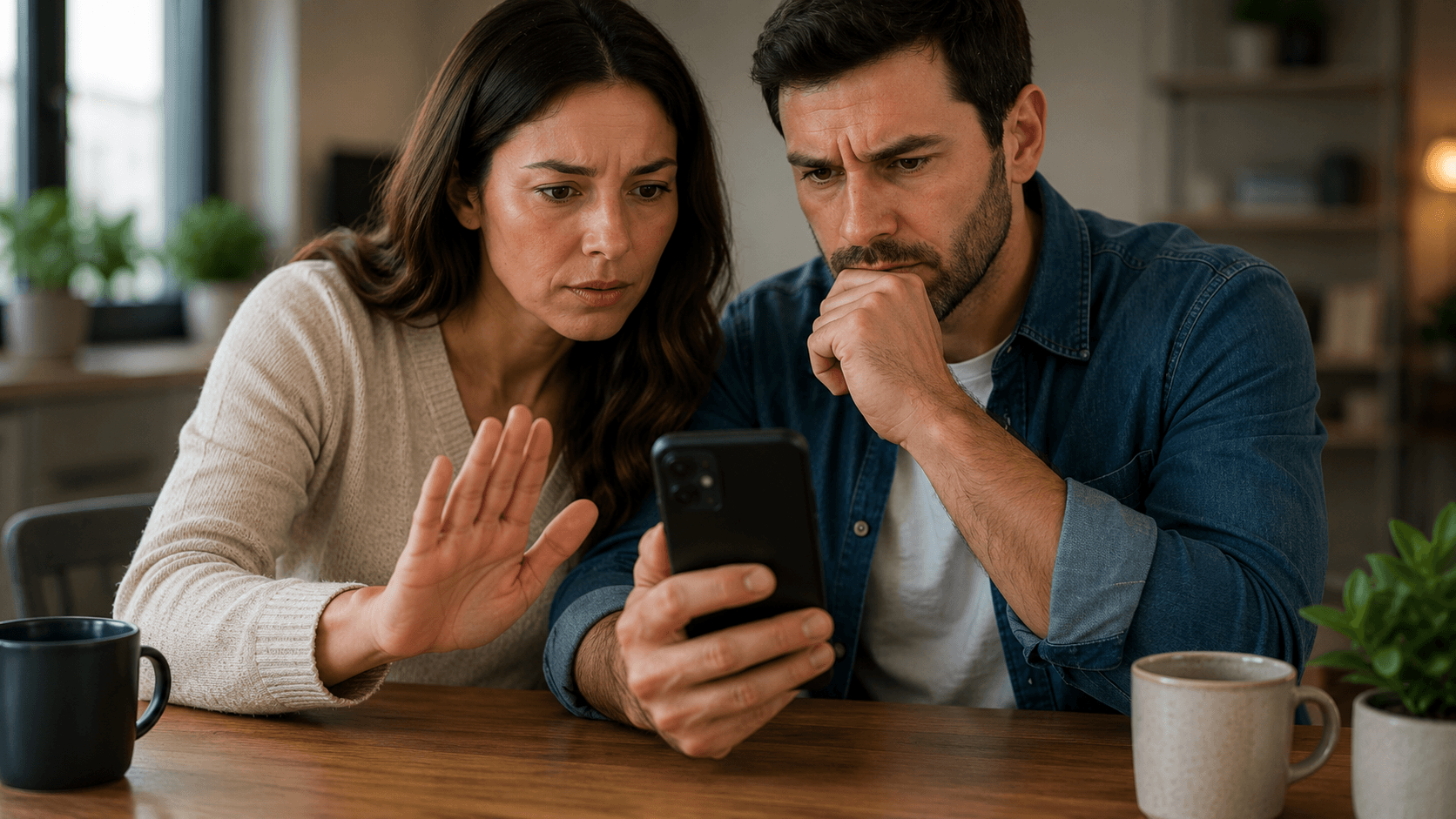
Most scams look believable at first.
A seller seems trustworthy. A text message looks official. A website appears legitimate. A job offer sounds exciting.
The problem is that scammers rarely reveal themselves immediately.
Instead, they leave clues.
Learning to recognize those clues can help you avoid becoming the next victim.
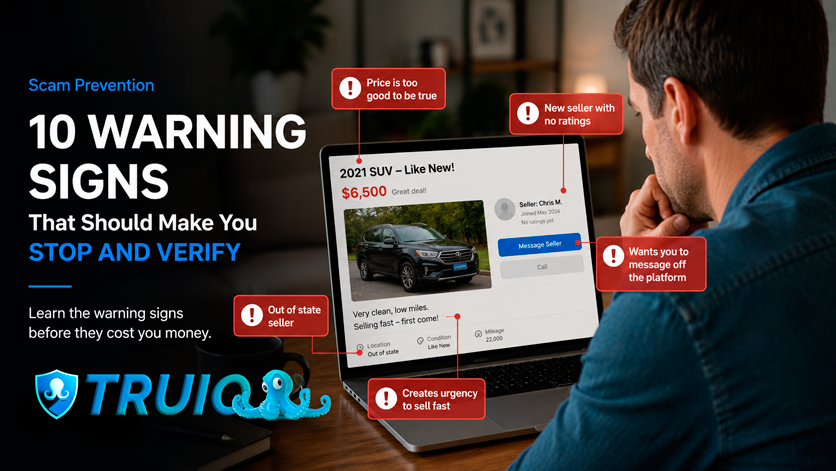
Here are 10 warning signs that should make you stop and verify before moving forward.
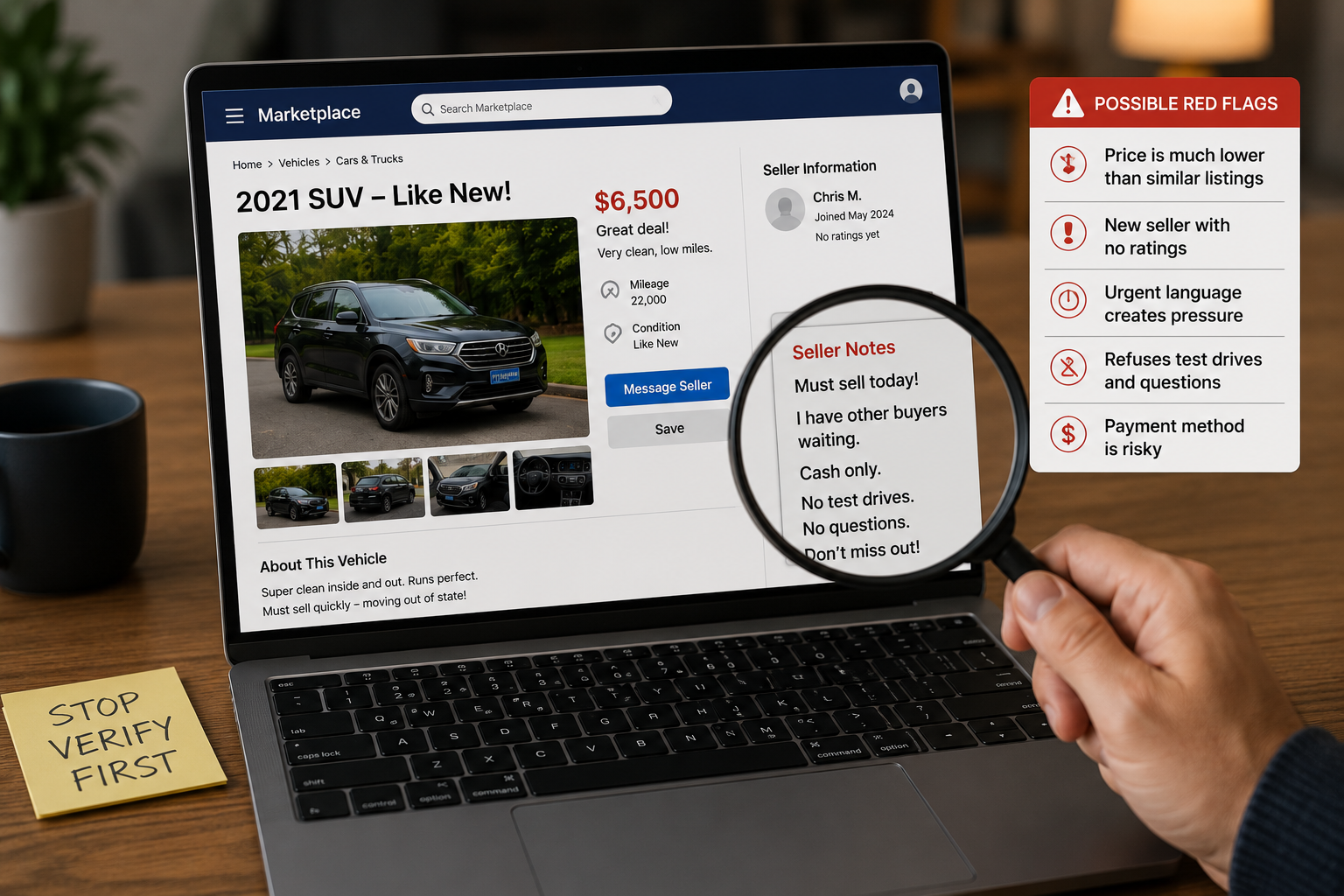
1. The Price Is Too Good To Be True
A vehicle worth $20,000 is listed for $8,000.
A rental property is hundreds of dollars below similar listings.
A brand-new product is being sold at a massive discount.
Scammers know that excitement can override caution.
If the price feels unusually low, ask yourself why.
2. They Want Payment Immediately
One of the most common scam tactics is urgency.
You may hear:
- "I have other buyers waiting."
- "The price goes up tomorrow."
- "I need a deposit right now."
- "Act before the offer expires."
Pressure is often used to prevent verification.
3. They Refuse Normal Verification
Honest sellers usually have no problem answering questions.
Be cautious if someone refuses to provide additional photos, proof of ownership, a video call, or details that can be verified independently.
The less verification they allow, the more careful you should be.
4. The Story Keeps Changing
Inconsistent details are a major red flag.
Maybe the seller says they are local but later claims to be traveling.
Maybe the item description does not match the photos.
Maybe the timeline changes every time you ask questions.
Scammers often struggle to keep their story straight.
5. They Want To Move Off The Platform
Many platforms provide protections for buyers and sellers.
Scammers frequently try to avoid those protections.
Examples include moving from Marketplace to text messages, moving from eBay to direct payment, or moving from a dating app to another messaging service.
Always ask yourself why they want to leave the platform.
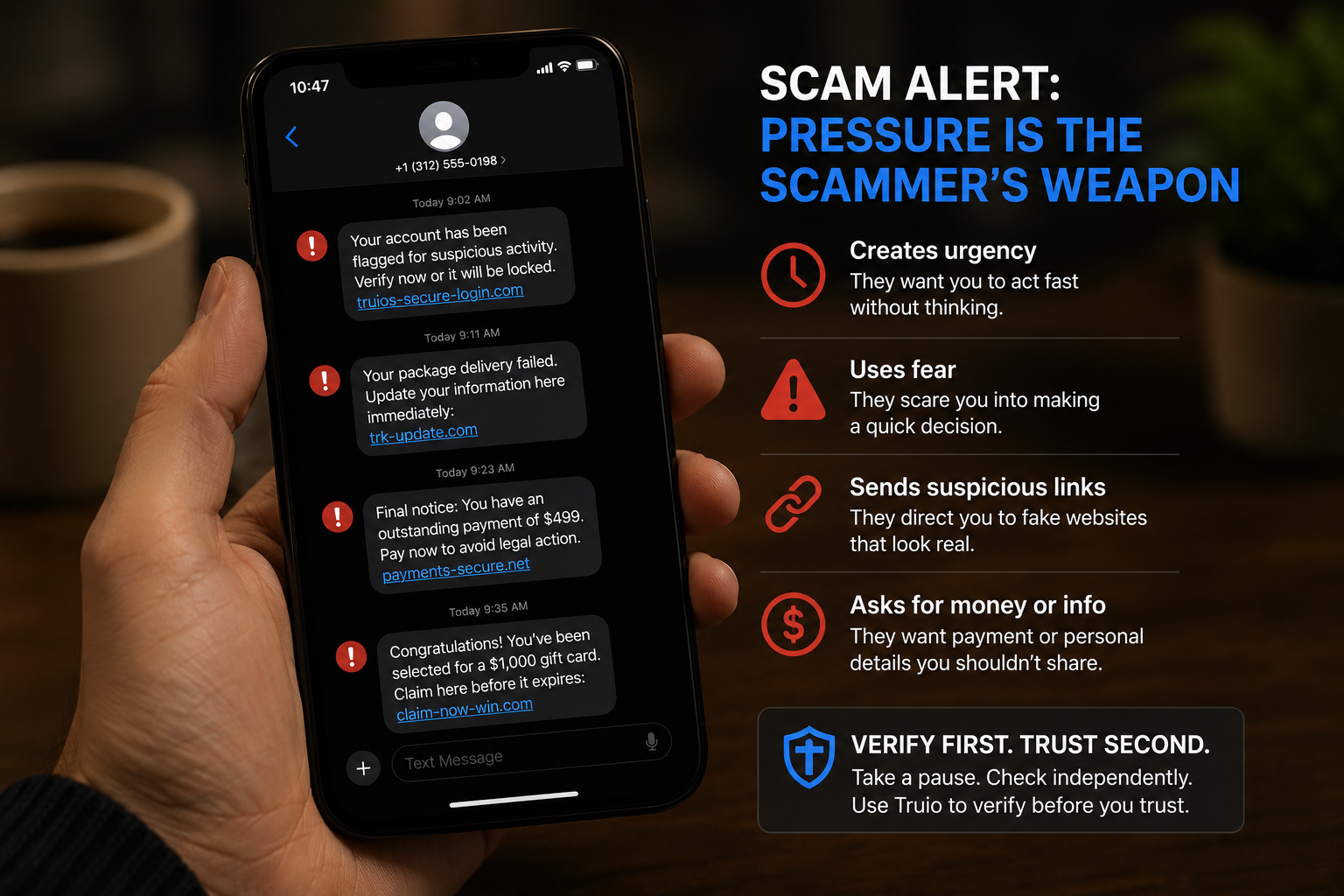
6. The Website Address Looks Slightly Wrong
Modern scams often use fake websites.
At first glance, a fake website may look legitimate.
A closer look may reveal misspellings, extra words, unusual endings, or a domain that is almost, but not exactly, the real company.
Always verify the exact website address before clicking or entering information.
7. They Ask For Unusual Payment Methods
Be cautious when someone requests gift cards, cryptocurrency, wire transfers, Zelle payments to strangers, or payment outside the platform.
These methods often provide little or no protection once funds are sent.
8. The Account Looks New Or Empty
Many scam profiles are recently created.
Check for limited history, few friends or followers, no reviews, no previous activity, or recently created accounts.
A lack of history does not automatically mean something is a scam, but it should increase caution.
9. They Create Fear
Not all scams rely on excitement.
Many rely on fear.
Examples include:
- "Your account has been compromised."
- "Your package cannot be delivered."
- "You owe taxes."
- "Your subscription will be canceled."
Fear can push people to act without thinking.
Pause and verify independently.
10. Something Feels Off
Your instincts matter.
Many scam victims later say, "I had a bad feeling, but I ignored it."
If something feels wrong, take a step back.
Verify details. Ask questions. Get a second opinion. Use a verification tool.
The extra few minutes could save you thousands of dollars.
What Should You Do If You Spot These Red Flags?
One red flag does not always mean something is a scam.
But multiple red flags together should immediately raise concern.
The safest approach is simple:
Verify.
Then decide.
The Bottom Line
Scammers succeed when people move too quickly.
They fail when people stop and verify.
The next time you encounter an incredible deal, an urgent message, or an opportunity that seems too good to pass up, remember this:
The more pressure you feel, the more verification you should do.
Verify First. Trust Second.
See something suspicious?
Paste the message, listing, or link into Truio Lite and check it before you trust it.
Try Truio Lite